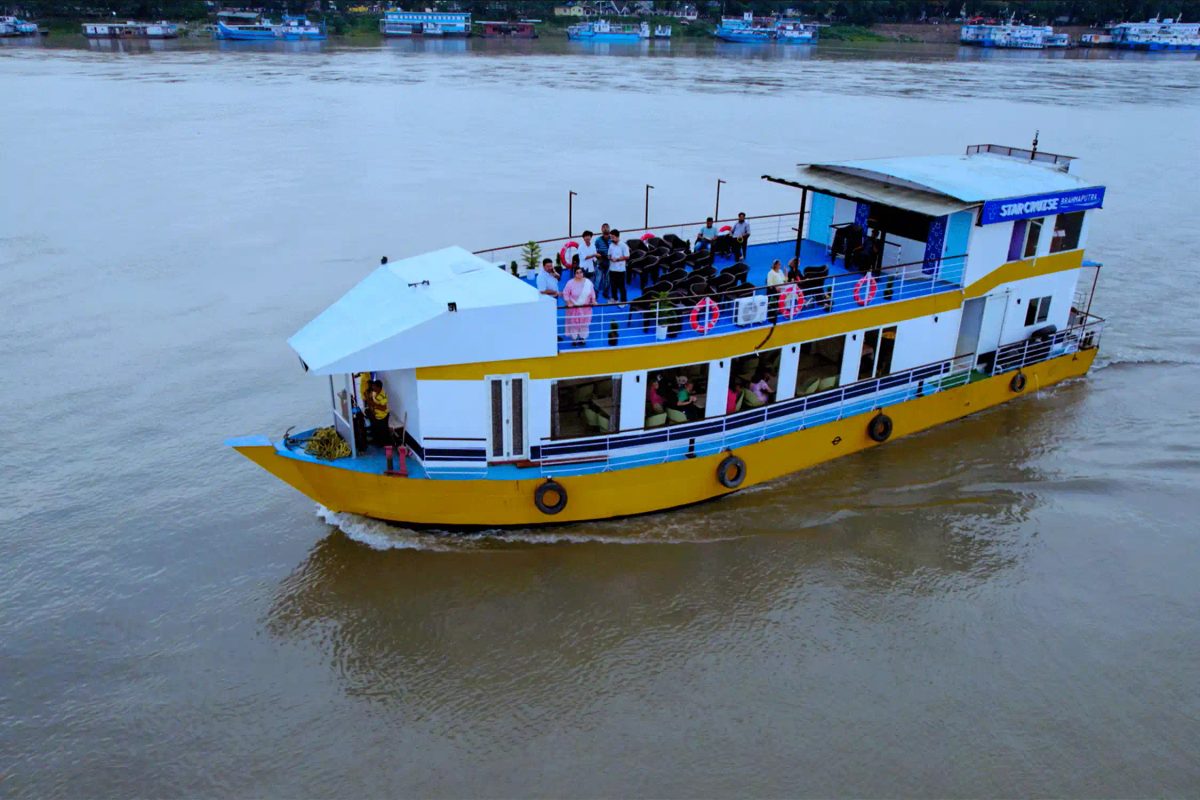
The Brahmaputra is not a backdrop in Guwahati. It organises the city’s edge, its weather moods, and some of its best hours. You can spend days here without a boat and still feel the river. You can also take a short ferry and understand the scale in a way no viewpoint fully replaces.
Riverfront walks and ghats
Sections of the city touch the river with public access, informal seating, and the daily traffic of boats and people. Evenings are popular when the heat breaks and the light softens. Mornings can be quieter and hazier, especially in winter.
This is not a continuous landscaped promenade like a single planned waterfront product. Quality of access varies by stretch. Go for air, light, and city-watching. Keep expectations honest on cleanliness and infrastructure — they improve in places and lag in others.
Ferry to Umananda Island
The classic short river experience: a ferry from the Guwahati bank to Umananda (Peacock Island). The ride is brief, the island is small, and the temple there is the usual reason people disembark. What stays with many visitors is the mid-river perspective — Guwahati as a band of buildings and hills, the water wider than it looked from shore.
Carry water. Do not expect extensive dining. Check return frequency so you are not guessing at dusk. Services can pause for weather, water conditions, or official reasons.
What “evening on the river” can mean
For most visitors it means: sit or walk near the water, watch boats, maybe eat nearby, maybe take a short cruise if a legitimate operator is running and conditions allow. Sunset colours on the Brahmaputra can be excellent when the sky is clear. In monsoon, sunset plans lose to rain and wind without apology.
Private boat arrangements exist in the broader tourism ecosystem; use licensed, safety-conscious operators and ask about life jackets. Do not improvise with random craft if you are unsure.
Monsoon and high water
The Brahmaputra in the rains is a different river: higher, stronger, more sediment, more caution. Ferry schedules and island access may change. Flooding and waterlogging in the city are separate but related seasonal stories. If river time is the emotional centre of your trip, build a backup museum or market plan.
Winter fog and visibility
Winter mornings can erase the far bank. Photography disappoints; the atmosphere can still be worth it if you like mist and muffled sound. Midday often clears more than dawn.
River + temple logic
Kamakhya on the hill and the Brahmaputra below are the natural pair of a first day. Do the hill early, the river later, meal in between. Umananda adds a third beat without requiring a long drive out of town.
Photography tips that are actually useful
- Late afternoon light is usually kinder than harsh midday glare on water.
- Include a human-scale object (boat, ghat steps) so the river’s width reads in the frame.
- Phone HDR helps with bright water and darker banks; still, expose for the sky if sunset is the subject.
- Respect privacy of bathers and ritual users at ghats.
Safety and practical sense
- Currents are not swimming-pool currents. Treat the river with respect.
- Children need close supervision near edges and on ferries.
- Footwear with grip helps on wet steps.
- Keep phones secured on boats; the Brahmaputra does not return them.
If you want more than a short ferry
Longer river tourism products appear and disappear with operators and seasons. Ask locally for what is running this week rather than believing a three-year-old listicle. A short, real ferry ride beats a fancy cruise that is not actually operating.
Pairing food with river time
Eat before or after, not as a fantasy picnic on Umananda with infrastructure that is not there. Mainland market areas near the central river approaches are better for a full meal. Tea on the bank, when available, is enough of a ritual for many evenings.
Guwahati without river time is only half-drawn. You do not need a full day on the water. You need one honest hour when you stop treating the Brahmaputra as scenery and start treating it as the reason the city is here.
Morning vs evening river hours
Mornings can be softer, foggier, and more local in rhythm — walkers, a few bathers, work boats. Evenings pull families and couples when the weather behaves. Photographers chasing colour usually prefer the evening window; people chasing quiet often prefer morning.
Midday river light is harsh and the bank can feel hotter than the city interior. Use midday for indoor food and save the water for better hours.
Combining river time with markets
Central market areas and river approaches can share a half-day if you do not overbuild the plan. Ferry first while energy is high, market and meal after. Reverse order also works if ferry queues look shorter later — ask on the ground.
If you only have forty minutes
Skip the island. Stand at the bank. Watch the width of the water. That alone corrects the mistake of treating Guwahati as a landlocked temple stop. Forty minutes on the island including queues may leave you anxious about return timing; forty minutes on the bank rarely does.
The Brahmaputra will still be moving when you leave. Your job is not to exhaust it. Your job is to let it recalibrate your sense of the city’s scale.
Sound, smell, and the non-visual river
Even with mediocre visibility, the Brahmaputra announces itself: diesel from boats, wet mud, fish markets on some approaches, wind that is cooler than the lanes behind you. If you only evaluate the river as a photo, grey days feel like failure. If you evaluate it as a place, grey days still work.
Listen for ferry horns and the different noise floor compared with Fancy Bazar. That contrast is part of why river time resets a trip.