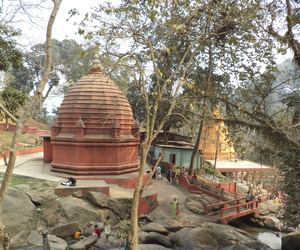
Aswaklanta Temple
Riverside Krishna temple on the north bank — quieter than the big-name shrines, strong on setting where the Brahmaputra feels close.
About
Aswaklanta Temple is one of those Guwahati-region shrines that rewards people who like temples as places beside water, not only as fame rankings. On the north bank, associated with Krishna worship and local legend, it sits with more river awareness than many inland city temples. You come for a calmer darshan rhythm and the sense that the Brahmaputra is part of the visit.
It will not replace Kamakhya on a first-timer’s must list. It will improve a north-bank day that already includes Hajo or a silk-village run — a pause that feels specific rather than generic.
What to expect
A living temple, modest in tourism infrastructure, with the usual request for respectful dress and behaviour. Legends linked to the name and the site circulate in local telling; you can enjoy them without needing a historian’s footnote for every stone. Priests and regulars set the tone more than tour groups.
Time your visit for soft light if the riverbank open areas are accessible and safe. Midday heat on open approaches is unromantic. Monsoon reduces the romance further — mud, slippery steps, and shorter patience.
How to reach
North-bank road access from Guwahati via the bridge network, then local navigation. Drivers who know Hajo routes can usually add Aswaklanta without drama. Public transport hoppers should allow extra time and ask locally for the last approach.
Who it suits
- Temple-interested travellers building a north-bank circuit
- Photographers who prefer riverside mood over crowd spectacle
- Repeat Guwahati visitors who already did the headline shrines
Practical tips
Do not block ritual movement for photos. Keep evenings realistic if lighting on approach roads is poor. Pair with a simple local meal rather than racing back to the city hungry and irritable.
Aswaklanta is a “setting temple” — river, legend, lower volume. Visit it when you have room in the day for quiet to be the attraction.
River mood and timing
Late afternoon can be kinder than noon: softer light on water, less glare on stone, more chance the visit feels like a pause rather than a chore. If you are chaining Hajo temples, put Aswaklanta where the schedule still has calm left — not as the eleventh stop of a dehydrated afternoon.
Ask locally about any evening ritual timing if that matters to you; do not assume a printed English timetable at the gate.
.jpg)